

In African cities, the deepest long-term value increasingly sits in
mission-critical urban storage and city logistics hubs.
Urbanisation, formalising value chains, the rise of e-commerce and
Q-commerce, and the need for resilient supply chains all converge
to create a structural need for well-located, professionally managed
logistics infrastructure. These assets are not discretionary—they
are essential operating platforms for retailers, 3PLs, FMCG,
pharmaceuticals and SMEs.
UVALIF focuses on curated logistics typologies that can be replicated and
scaled across markets, including business self-storage hubs for SMEs,
edge-of-city cross-dock depots, urban fulfilment and micro-warehousing
nodes, and light-industrial warehouses in strategic corridors. Each asset is
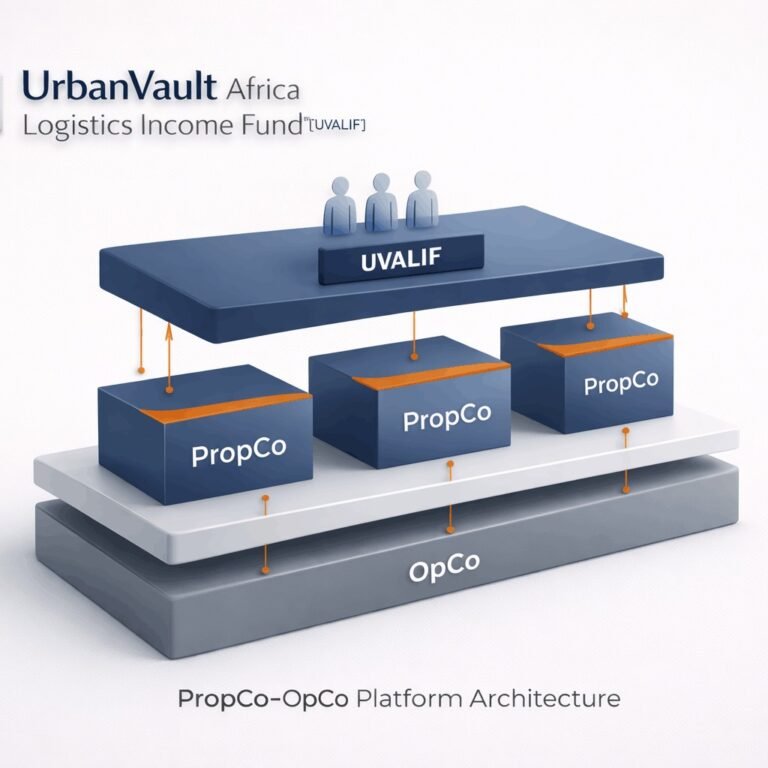
held in a PropCo structure, with long-dated, investor-grade leases or master
service agreements to strong local, regional or international operators. Leases
are designed with inflation-linked escalations, maintenance and ESG
obligations on the tenant, and protective covenants at platform level.

This approach positions mission-critical logistics hubs as the strategic core of
UVALIF – the primary engine for long-term, corridor-aligned, covenant-rich
cash flows.
Aligning with UVALIF channels your capital into African cities where formal
logistics real assets are structurally undersupplied – pushing occupancy, rents and
values steadily higher as trade and consumption deepen.
Around each core logistics node, we selectively develop or acquire
complementary self-storage, micro-fulfilment and light-industrial assets.
These may include multi-level business self-storage facilities in high-density
districts, urban micro-fulfilment centres serving e-commerce and Q-commerce
platforms, temperature-controlled units for pharma and food, and flexible
light-industrial units for assembly, value-add processing and last-mile
logistics.
Strategically, these assets are our best complementary or “satellite” play:
they wrap the core hubs, capture additional tenant demand and throughput,
and add lighter, flexible real-estate yield to the portfolio. Where appropriate,
we structure master leases to strong 3PL or platform tenants, or curate a
diversified tenant mix anchored by regional operators. In all cases, the core
logistics hubs remain the covenant centre of gravity.
By aligning with UVALIF, you gain exposure to the same structural forces reshaping
global logistics—formalising supply chains, shorter delivery windows and densifying
cities—translated into an African, corridor-driven portfolio.
UVALIF is designed as an income-focused, institutional-grade
vehicle for qualified investors, including African HNWIs and
diaspora, family offices, pension and provident funds, insurers,
DFIs, private credit and infrastructure funds, and other
institutional allocators.
The fund aims to offer regular distributions from rental income generated by long-dated leases,
while targeting attractive total returns over the medium term.
By separating logistics real estate ownership (PropCo) from operations
(OpCo) and locking in disciplined lease structures, investors gain exposure to
predictable, inflation-linked rental cash flows backed by essential trade and
consumption demand. At the same time, we retain upside through value
creation at the asset and portfolio level – including yield compression as
assets stabilise, ESG upgrades take effect and African logistics real assets
gain broader recognition among global allocators.

By partnering with UVALIF, you gain access to a sector where global institutions are
driving values—yet our vehicle is designed to let qualified private investors
participate alongside them, capturing institutional-grade upside without writing
institutional-sized cheques.
UVALIF’s properties are secured by medium- to long-dated leases
to creditworthy logistics operators, 3PLs, e-commerce platforms,
FMCG distributors and SME clusters. Tenants invest heavily in
racking, automation, systems and fit-out, creating strong
incentives to remain in place over the long term.
Leases are structured on a predominantly net basis – with taxes, insurance,
maintenance and most operating costs borne by the tenant or recovered
through service charges. Investors therefore benefit from
institutional-quality, professionally managed exposure without day-to-day
property management responsibilities. Your capital works quietly in the
background while local and regional operating partners manage goods flows,
inventory and last-mile delivery. UVALIF and N3 CAPITAL AFRICA handle
origination, due diligence, asset management, ESG reporting and
governance.
Aligning with UVALIF places your capital behind a formidable moat of location,
infrastructure, regulatory and operational barriers that shield returns from
low-barrier competition.
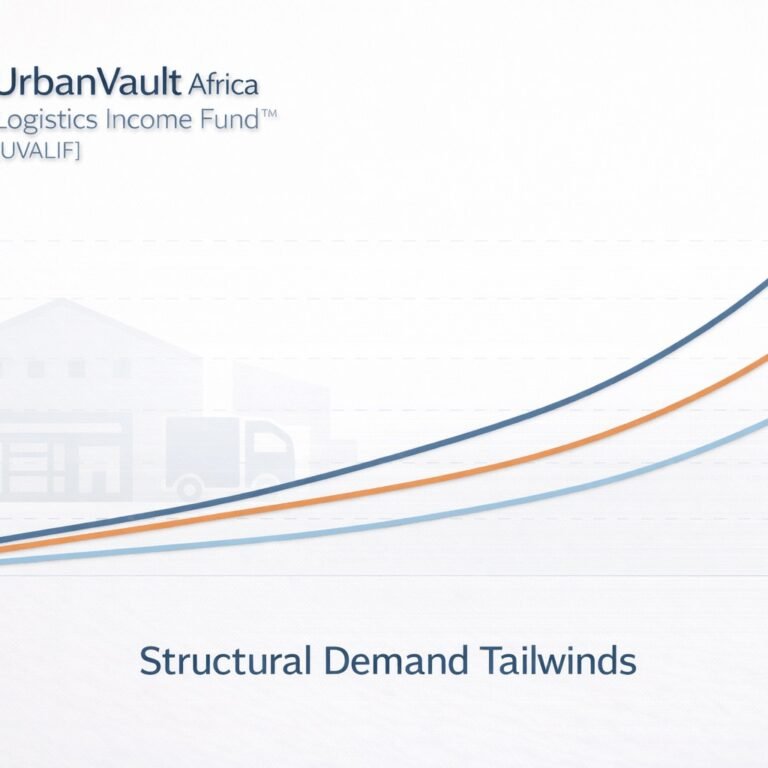
Africa is the world’s fastest-urbanising continent, with city
populations set to double in the coming decades. At the same time,
intra-African trade, regional value chains and digital commerce
are intensifying. Together, these forces create a deep structural
need for new and upgraded storage, cross-dock and city logistics
capacity.
Legacy logistics stock across many African markets is fragmented,
under-specified and poorly located relative to today’s corridors and consumer
nodes. Informal or obsolete storage often lacks power resilience, security,
digital connectivity and compliance with modern safety standards.
Corporates, platforms and SMEs seeking to compete in integrated regional
markets require a different grade of infrastructure.
Public budgets alone cannot deliver this shift. Banks often favour short-term
working capital lending over long-dated logistics real estate finance. Global
investors, meanwhile, are actively searching for credible Pan-African logistics
platforms to complement global allocations. UVALIF is designed to sit at that
intersection – translating demographic and trade certainty into covenanted
cash flows and measurable real-economy impact.
Our portfolio is designed for durability. UVALIF offers investors a defensive-growth
strategy backed by essential logistics demand, long leases and disciplined corridor
selection.
Goods still need to move in and out of African cities through currency cycles,
elections and commodity swings. While volumes may flex and tenants may
consolidate, the underlying need for secure, well-located storage and logistics
nodes persists – and often strengthens as businesses seek efficiencies.
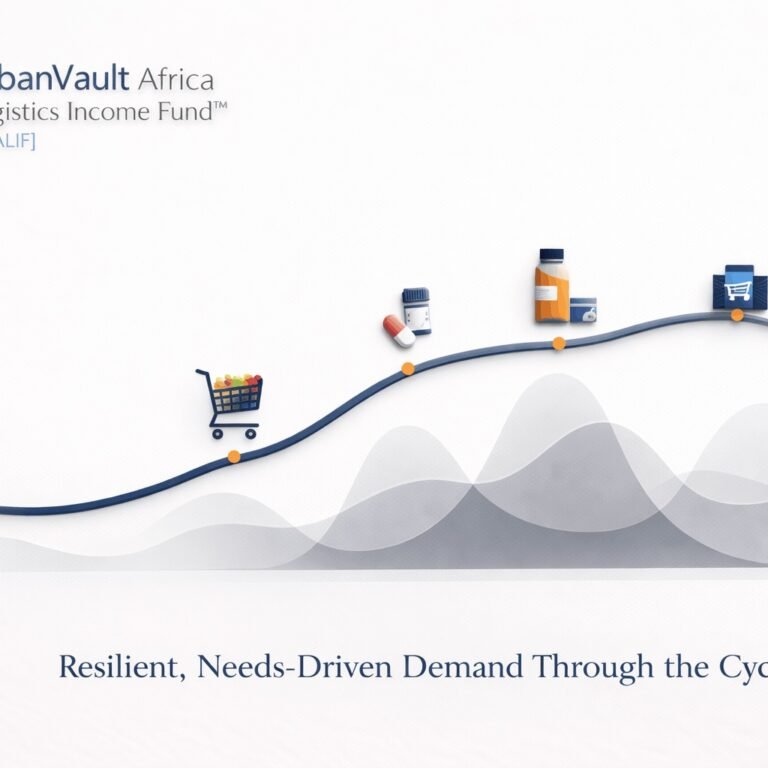
By focusing on essential, corridor-aligned logistics uses – serving food,
FMCG, pharma, e-commerce and strategic imports and exports – UVALIF
positions investor capital in a resilient segment of the real asset universe.
This defensive profile is further reinforced by long lease tenors,
inflation-linked escalations and diversified tenant and country exposure
across the fund.
Investing with UVALIF places your capital in facilities that can maintain high
occupancy and throughput even in challenging macro conditions, delivering
dependable revenue and minimising downtime.
Across Africa, consumer behaviour and distribution models are
changing rapidly. E-commerce, Q-commerce and omnichannel
retail are gaining traction; corporates are redesigning supply
chains to reduce stock-outs, shorten lead times and comply with
stricter quality and ESG requirements. These shifts require dense
networks of urban fulfilment centres, micro-warehouses and
cross-dock depots – not just traditional bulk warehousing.
UVALIF’s typologies and clustering strategies are designed to align with this
evolution. Core hubs in strategic corridors act as regional and city gateways,
while self-storage and micro-fulfilment assets – often co-located or nearby –
extend reach, enable last-mile speed and deepen the fund’s lease base.
By partnering with UVALIF, you gain exposure to the long-term tailwind of
formalising supply chains and digitised distribution, where volumes, tenancy depth
and infrastructure requirements are all trending upward.
In many African cities, quality logistics and storage space is
structurally undersupplied. Land constraints, zoning, power
requirements and connectivity all create natural barriers to entry.
Well-located, modern logistics parks and storage hubs therefore
tend to run at high utilisation levels, with strong renewal
behaviour from established tenants.
Because logistics fit-out is capital-intensive and route / catchment
relationships are geographically anchored, tenants are far less mobile than
typical office occupiers. This “stickiness” supports long-term occupancy and
predictable renewals, reducing downtime and re-leasing risk for investors.
Partnering with UVALIF means owning properties whose tenants are financially and
operationally committed to staying in place, turning structural “stickiness” into
long-term peace of mind.
For African and global investors already allocated to traditional sectors such
as offices, retail, residential or even single-market logistics, Pan-African
urban storage and city logistics offer differentiated demand drivers and risk
characteristics. Returns are anchored in trade, consumption and
supply-chain resilience, not purely in discretionary consumer spend or one-off
mega-projects.
Allocating a portion of portfolio capital to UVALIF can help dampen volatility
while maintaining attractive income and total return potential. As the
platform grows, investors gain diversified exposure across countries, cities,
corridors, tenant types and asset typologies – all under a unified governance
and reporting framework.
Investing with UVALIF injects true diversification into your holdings, balancing
cyclical sectors with the steady, needs-driven pulse of logistics-backed income.
UVALIF is being structured with clear alignment between sponsors and
investors. Sponsor capital from N3 CAPITAL AFRICA is invested alongside
Limited Partners on the same economic terms, with performance-based
participation that only accelerates once investors have received their
preferred returns and capital back.
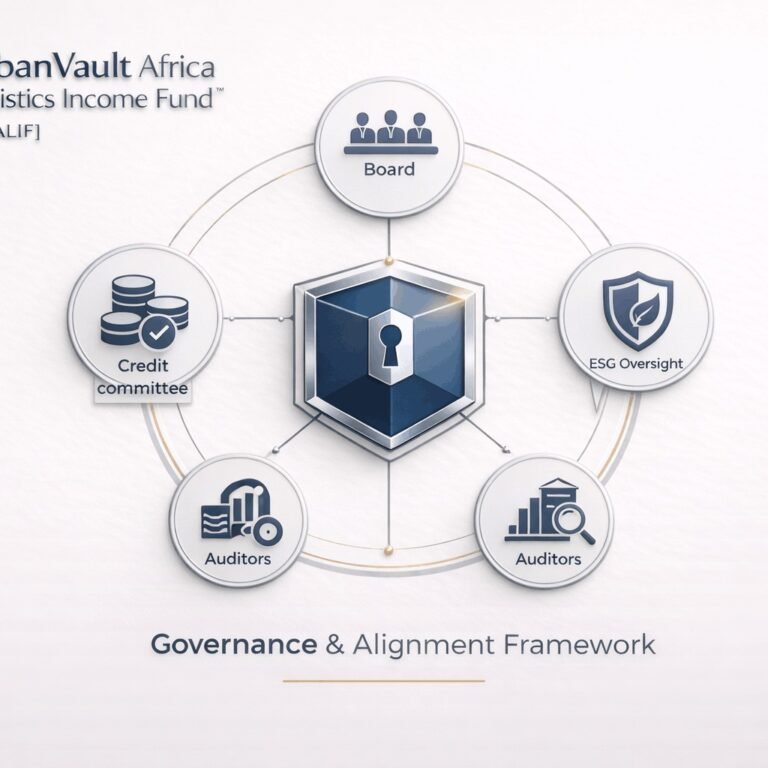
We prioritise conservative leverage, fixed or hedged debt structures where
appropriate, and disciplined acquisition and development criteria focused on
creditworthy tenants, strategic corridors, infrastructure resilience and robust
DSCR at both asset and portfolio levels. Governance is anchored in regular
reporting, third-party audits, independent valuations and transparent ESG
and impact metrics relevant to African logistics and storage infrastructure.
By partnering with UVALIF, you capture a stream of long-term, inflation-hedged
cash flows underpinned by creditworthy logistics tenants, positioning your capital for
steady income, quarter after quarter.
The economics and exit strategy of UVALIF are designed to
balance three priorities:
a. Reliable, Inflation-linked Income;
b. Disciplined Use of Leverage and Capital;
c. Clear, Institutionally Credible Exit Pathways for Investors.
Target Return Profile and Distributions
UVALIF targets a blend of current income and capital appreciation over a
typical 8–10 year fund life. While final terms will be defined in the fund
documentation, the reference profile is:
(i) regular cash distributions funded
by net rental income from long-dated leases; and
(ii) total-return potential
driven by asset-level value creation, yield compression and platform scale.
The objective is to deliver a risk-adjusted return consistent with core-plus
logistics real estate in emerging markets, while maintaining downside
protection through conservative underwriting and long lease tenors.
Capital Structure and Leverage Discipline
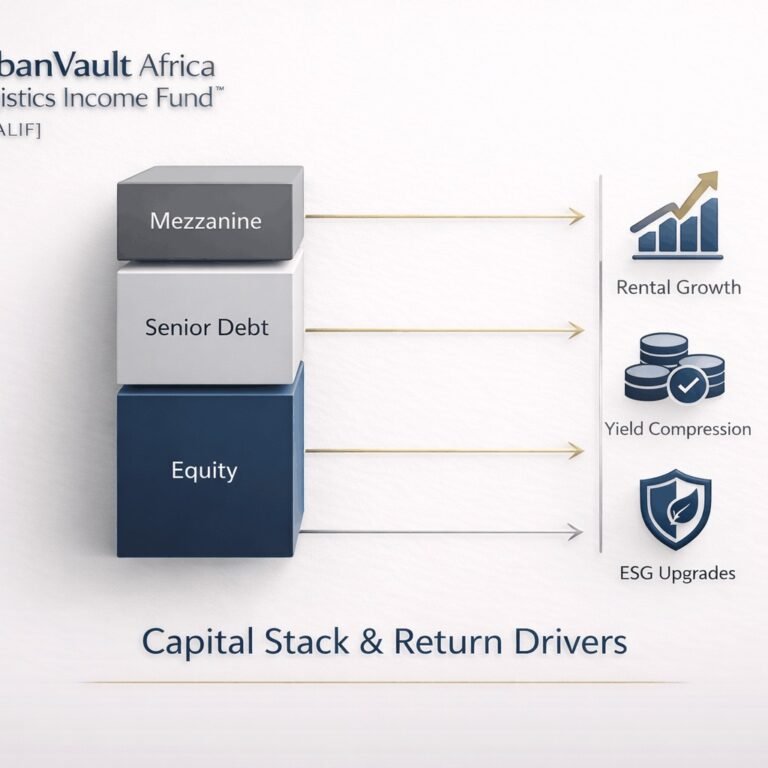
Each asset or cluster is capitalised using a mix of senior secured debt and
equity, calibrated to maintain prudent DSCR levels and resilience under
interest-rate and FX stress scenarios. At portfolio level, we target moderate
loan-to-value ratios, favouring amortising or partially amortising structures
where feasible and hedging material foreign-currency exposures. Our
philosophy is that leverage should enhance return on equity without
becoming the primary driver of performance.
Value-Creation Levers
Value creation in UVALIF is driven by a combination of:
(i) stabilising newly
developed or repositioned logistics hubs with strong tenants;
(ii) contracting
medium- to long-dated leases with inflation-linked escalations and robust
covenant packages;
(iii) clustering complementary self-storage and
micro-fulfilment assets around core nodes; and
(iv) implementing ESG and
efficiency upgrades that improve operating resilience and attract premium
valuations from institutional buyers. As the portfolio matures, we expect both
rental growth and cap-rate compression to contribute to NAV uplift.
Exit Pathways for Investors
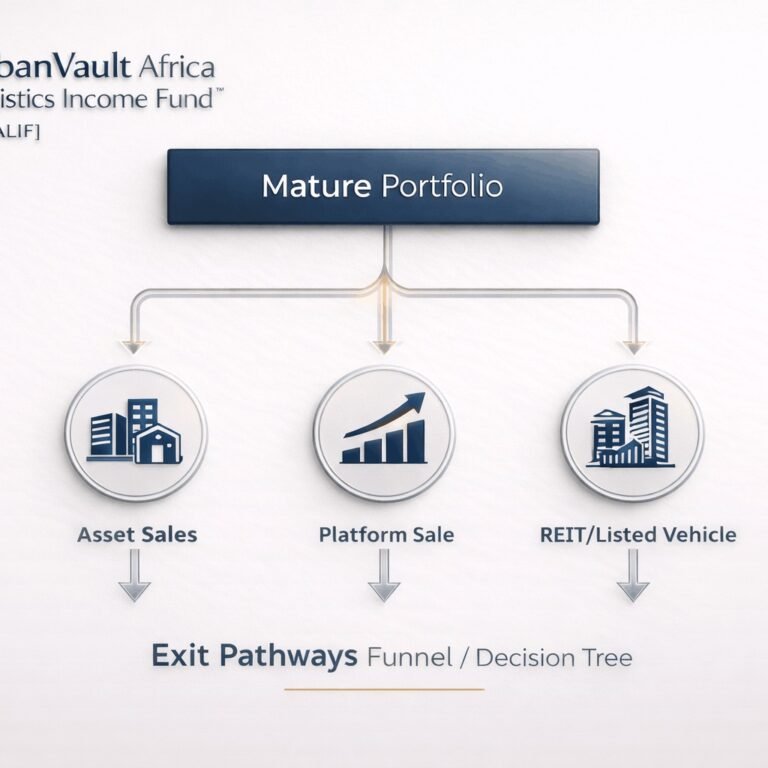
UVALIF is being structured with multiple, mutually reinforcing exit routes.
At the asset level, individual logistics parks or city clusters may be sold to
regional logistics operators, local institutions, Pan-African REITs or
specialist infrastructure and logistics funds seeking stabilised,
income-generating assets. At the portfolio level, UVALIF may pursue a
strategic sale of a sub-portfolio or platform interest to a larger institutional
sponsor once sufficient scale and track record have been achieved.
In parallel, the sponsor will periodically assess the feasibility of migrating a
core pool of assets into a listed vehicle or REIT structure in an appropriate
African or international jurisdiction, thereby providing an additional
liquidity option for investors while preserving the operating platform. Any
decision to pursue a listing or large-scale portfolio sale will be guided by
market conditions, governance considerations and investor preferences.
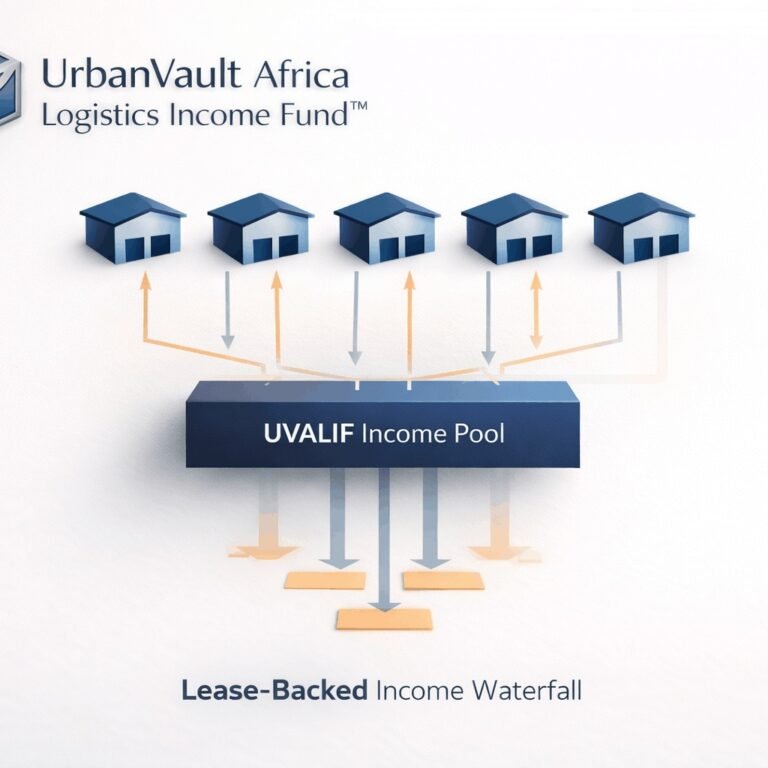
Realisation proceeds from asset or portfolio sales are first applied to return
investor capital and any accrued preferred return, in line with the fund’s
distribution waterfall. Subject to investor approval and prevailing market
conditions, a portion of proceeds may be recycled into new, higher-conviction
opportunities, allowing investors to benefit from the sponsor’s origination
pipeline without committing fresh capital. Throughout, UVALIF will
maintain a transparent reporting framework so that Limited Partners can
track income, NAV progression and exit activity with
investment-committee-grade clarity.
UVALIF is being structured with multiple, mutually reinforcing exit routes – with
clear, institutionally credible exit pathways for investors.
The UVALIF strategy is led by a team of experienced African real estate and
infrastructure specialists with a track record across logistics, storage,
industrial, hospital and mixed-use assets, supported by a network of
operating partners, technical advisers and capital markets professionals.
This combination of local insight and institutional discipline is critical to
originating, structuring and managing bankable logistics platforms in diverse
African markets.
We focus on building durable relationships with operators, regulators, DFIs,
banks and specialist contractors in each target country, ensuring that each
project is compliant, technically robust and commercially grounded from day
one.
Aligning with UVALIF positions your capital in a sector where disciplined,
corridor-driven development keeps competition thin, occupancy high and rental
pricing power strong.
UVALIF is designed for investors who want their capital to do two
things at once: deliver resilient, inflation-protected logistics income
and support the build-out of essential storage and city logistics
infrastructure in African cities.
If you are an African HNWI or member of the global African diaspora, a
family office, pension or provident fund, insurance company, DFI,
infrastructure or private credit fund, or other institutional allocator, we
invite you to explore partnership with us.
By joining the UVALIF investor community, you will receive access to
detailed platform materials, city-by-city and corridor-by-corridor roll-out
plans, asset typology briefs, covenant and capital-stack overviews, and
regular portfolio reporting. You will also gain priority consideration in future
capital raises as the platform scales from initial seed assets towards a
Pan-African network of 100+ mission-critical urban storage and city logistics
sites over the next decade.
To register your interest, please contact the UVALIF team or your N3 CAPITAL
AFRICA relationship manager. Together, we can convert Africa’s logistics and
storage infrastructure gap into a disciplined, mission-driven real asset opportunity.